: J8 ~" Y' C+ D( d8 z1 s* ]' h贝尔焦诺说,塞浦路斯人可能是从埃及人那里学到了制作香水的方法,因为当时两国关系密切。考古学家曾在一座古埃及的墓穴中发现过香水,这座墓穴被认为是公元前3000年前古埃及的一个皇族墓穴。在此发现的香水中混有植物油和动物油。 ; c$ Y" c3 Q" A* l. H. }) Z . s U; Y7 M7 B3 L2 F8 a* z香水对于古人而言不仅可发挥吸引嗅觉的作用,还因为其中的芳香树脂具有医药效用,在宗教祭典和葬礼仪式中使用。除香水外,此番在塞浦路斯发现的古香水作坊中还发现有炼铜铺子、酒窖和橄榄油榨取坊等遗迹。; w) I1 I$ z! K! e f- d' F3 q
0 ]4 w! d: }4 y5 s2 ?% O千年香水秘方 z+ ]( f6 X% b9 L . w4 v N/ K$ u5 m# I成分:薰衣草、迷迭香、松木、芫荽、欧芹、香柠檬、苦杏仁、月桂以及橄榄油等。 - _/ c9 D1 l X |" e C% h4 C) B8 V* Q D- T* j: x: Z
制作方法:将碾碎的香草加进油和水里,再把混合物装进长颈小瓶中,最后将瓶子放在灰烬上烤12小时。& h5 G, y C0 n* ~. B, `
: u( i* ?' y' R" i- l/ k评价:% k- R. Z" L* I2 h
/ G8 R( Z5 z$ o「香水闻起来不错。」——女游客阿莱夏•阿凡纳塔 8 g7 b% b# {1 ?5 F B% \/ E4 t' P; G0 Y% U& g `" u4 B) a' z5 |2 a
「我能闻出有松脂味。」——参观者朱丽娅, ]) k: J+ `' ~9 V
- G) e+ W5 D0 j来源:信息时报 8 O" W' [; N9 R7 d& z # C8 H+ {" L& [* [* K0 T. h2 N. F4 {4000-year-old perfumes found on Aphrodite's fabled island 7 S+ G3 ]! x9 c- YThe remains of ancient scents and bottles found on Cyprus have gone in display, writes Malcolm Moore.# L2 N8 M; ?5 ~8 M' I9 g% a
p+ p# k1 Y- h
ITALIAN archaeologists have found the world's oldest perfumes on Cyprus.( Z E/ C) x6 ~( e" q5 r
# l) ?2 A+ C2 {* pThe perfumes were scented with extracts of lavender, bay, rosemary, pine or coriander and kept in tiny translucent alabaster bottles. 5 [! b! u8 L! L9 B* g5 B% X2 [4 V6 H9 i6 A
The remaining traces found at Pyrgos, in the south of the island, are more than 4000 years old.0 v& G4 L! P. q% L7 y1 ]
P/ H& l8 Z3 j5 G. I' Z" H0 [
They were discovered inside what archaeologists believe was an 3995-square-metre perfume-making factory. 0 U4 d3 f$ C4 V# q/ W, c# ] : }# \6 z" k* G3 }"We were astonished at how big the place was," the leader of the archaeological team, Maria Rosa Belgiorno, said. "Perfumes must have been produced on an industrial scale.", ]( o( n# _" S* Z1 w$ e! U5 Z2 s5 e
' M/ U2 v" [/ {! V* C1 ?
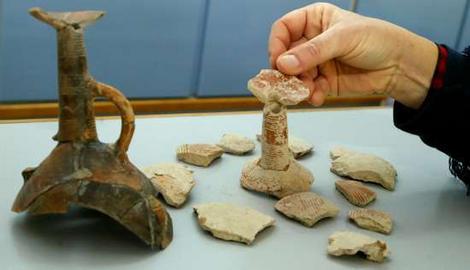
At least 60 stills, mixing bowls, funnels and perfume bottles were perfectly preserved at the site, which had been blanketed in earth after a violent earthquake about 1850BC.7 O4 }" s/ g7 r) y# K% T4 u
, R# G2 @6 b7 X
The abundance of perfumes fits well with Cyprus' mythological status as the birthplace of Aphrodite, the Greek goddess of love. o/ J+ O; s, |& I
4 ~9 p) ~" {7 s* b- ]5 r$ s"The goddess' myth was strongly linked to the perfume she used to get what she wanted," the head of Cyprus' antiquities department, Pavlos Flourentzos, said. 3 c$ ^$ [" |/ k. y1 ~ % x2 b8 x: R7 dThe finds are now on display at the Capitoline Museum in Rome. # q* k/ ]/ y1 c( d) o$ z 4 l# Z9 m+ n: P1 s9 ]- wFour of the perfumes have been re-created from residues found at the site.4 Y" j+ s; C5 h) q8 a
6 ^3 s- o2 U, U9 f3 c
An Italian foundation, which aims to re-create antique traditions, distilled them according to techniques described by Pliny the Elder, by grinding the herbs, adding them to oil and water, and burying them in a long-necked jug over hot embers for 12 hours.1 o" e/ @, v2 v7 U
' i- q% n) ?0 C
"It smells good, but strong," museum visitor Alessia Affinata, 30, said. "I can smell the pine especially," said Giulia Occhi Villavecchia, 23.$ x% b. i+ d1 ^% `! w
/ I6 B! g8 U5 k J
Neither was sure they would actually wear them.
图片附件: [Fragments of ancient perfume jars found at Pyrgos, Cyprus.] perfumes.jpg (2007-3-24 10:10, 17.02 KB) / 下载次数 93 http://5.35.249.64/bbs/attachment.php?aid=249682&k=ecf24c28174ccc7dafc3f9459cb4d532&t=1790580094&sid=4iQ4RX

 图片附件: [Fragments of ancient perfume jars found at Pyrgos, Cyprus.] perfumes.jpg (2007-3-24 10:10, 17.02 KB) / 下载次数 93